When and how should a Triad roof be tarped?
Many emergency tarps in the Triad go over holes from limbs and trees, or over shingles torn off by downbursts. Covering the opening quickly keeps a roof claim from becoming a ceiling and insulation claim too.
Last reviewed against official sources. General information, not insurance or legal advice.
If water can get in, cover the opening as soon as it's safe: plywood over holes, then a heavy tarp over the ridge, fastened with screwed-down boards. Get the tree off first. Keep photos and an itemized invoice; reasonable emergency costs are usually reimbursed on a covered claim. Your policy expects you to try to prevent further damage.
Your duty to protect the house
North Carolina homeowners policies require reasonable steps to protect the property after a loss. The NC Department of Insurance advises temporary repairs such as tarps or plywood, with receipts kept for reimbursement.
Order of work after a tree strike
- Power company clears any lines.
- Tree service removes the tree or limbs from the roof.
- Roofer covers holes with plywood, then tarps over the area and the ridge.
- Photos of each step and an itemized invoice for each company.
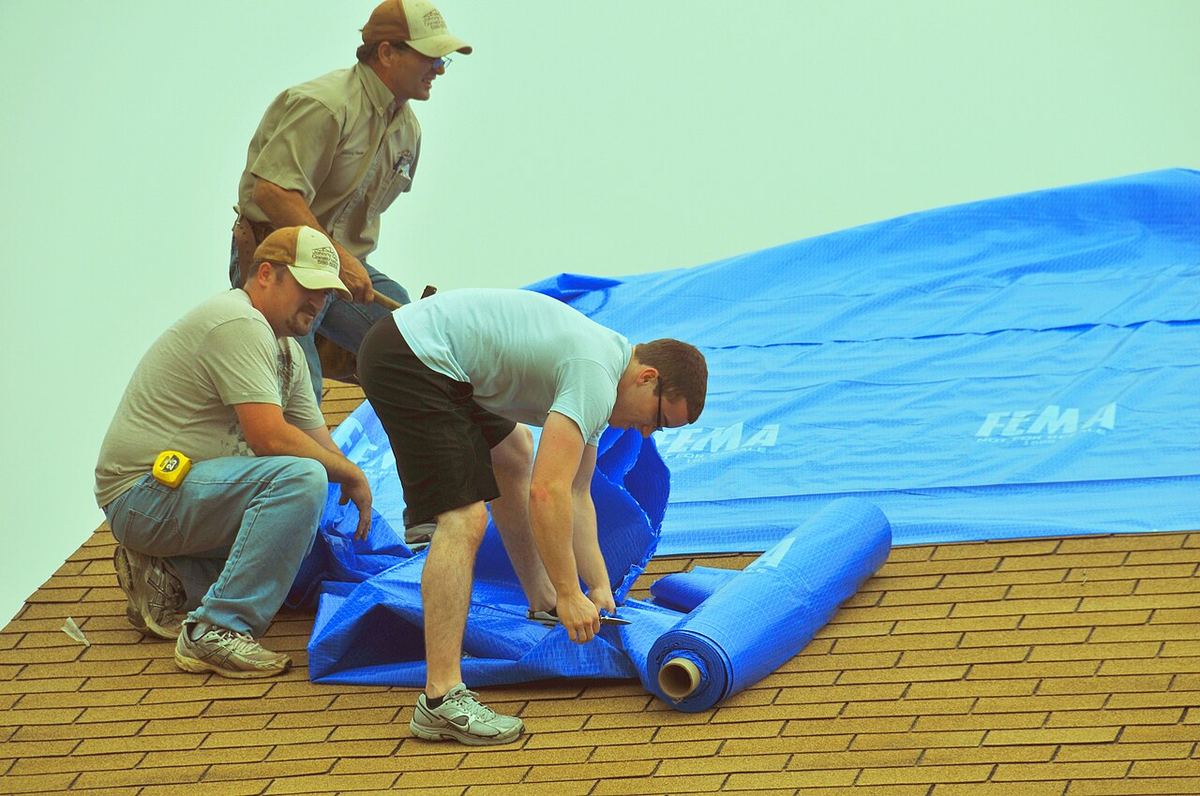
A tarp that stays put
- A heavy, UV-resistant tarp that extends well beyond the damage and over the ridge.
- Boards (battens) screwed through the tarp edges into the roof deck.
- No loose sandbags or bricks; they slide off in wind and can fall.
Winter tarping
After an ice storm, roofs are slick and limbs keep falling for days. Wait until ice melts before anyone climbs up, and stay out of rooms under damaged limbs. Snow and ice can collect on a tarp and add weight, so brush it off from the ground if you can, and check that water isn't pooling.
Doing it yourself
Only for a small area on a low, dry roof you can reach safely from a ladder. Falls are one of the leading causes of construction deaths, according to OSHA. Steep or two-story roofs, slate and anything involving a tree are jobs for insured professionals.
Paying and reimbursement
Ask for emergency tarping on a separate itemized invoice. You don't need to sign a full replacement contract to get a tarp, and North Carolina has no roofing-specific contract law, so read any contract carefully. Reasonable costs for tarps, plywood, labor, tree removal from the roof and drying are usually reimbursed on a covered claim. Charging grossly excessive prices is illegal in North Carolina during a declared state of emergency; report it to the NC Attorney General.
Frequently asked questions
Will insurance pay for an emergency tarp?
Usually, as part of a covered claim. Keep the itemized invoice and photos.
Should I tarp before the adjuster visits?
Yes, if water can get in. Photograph the damage first, then cover it.
Is it safe to tarp after an ice storm?
Not until the ice melts. Roofs are slick, and damaged limbs can still fall.
Policies vary. Check your own policy and ask your insurer or agent about anything that affects your claim. Laws and rules can change; this page reflects official sources as of October 29, 2026. RoofingGreensboro.com is not a contractor, insurer, adjuster or law firm.
Find local help
Roofing contractors serving Greensboro and the Piedmont Triad · Ask for storm help · Counties and towns