Did the hail hurt your roof? How to check a Triad home
How to tell if hail damaged your roof in Greensboro, High Point, Winston-Salem or Burlington: shingles, metal, slate and flat roofs, gutters and vents, the sizes that matter, and how damage can show up later.
Last reviewed against official sources. General information, not insurance or legal advice.
After a Triad hailstorm, start with the metal: fresh dents in gutters, downspouts, box vents and heat pump fins show hail fell and from which side. On the shingles, look for scattered, round dark marks where granules were knocked off, and soft spots that give under a thumb. Damage spread randomly over the storm-facing slopes is hail; even wear across the whole roof is age.
The NOAA Storm Events Database lists 413 hail reports in the five Triad counties from 2006 through 2025. Hail 2 inches across, about the size of a hen's egg, has been reported six times, including three spots in Guilford County (Broadview, Hill Top and Groomtown) on March 16, 2025. May is the Triad's peak hail month, with June close behind.
How does Triad hail damage a shingle?
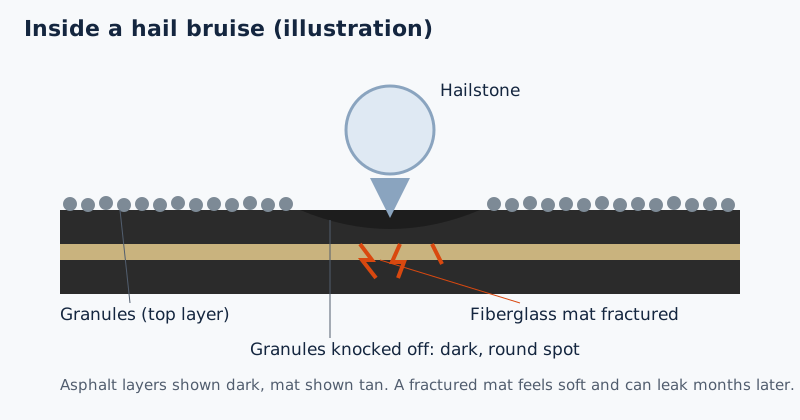
Short answer: the stone knocks granules off a small round area and, if it hits hard enough, fractures the fiberglass mat underneath. The roof looks spotted, and the bruised spots wear through faster than the rest.
Most houses from Kernersville to Mebane have asphalt shingles. Three-tab shingles on older ranches in east Greensboro, High Point and Burlington show hail plainly; the thicker architectural shingles on newer homes in Summerfield, Oak Ridge, Clemmons and Whitsett hide it. On any of them, an inspector checks for:
- Round bare spots with sharp edges and dark, fresh asphalt showing.
- Bruises: soft, spongy spots where the mat cracked, even if the granules look fine.
- Cracked or torn tabs, more common on old, brittle shingles.
- Hits on ridge and hip caps, which sit higher and take more direct impacts.
- Matching marks on soft metal nearby, which tie the shingle damage to the storm.
How do you tell hail from ordinary wear?
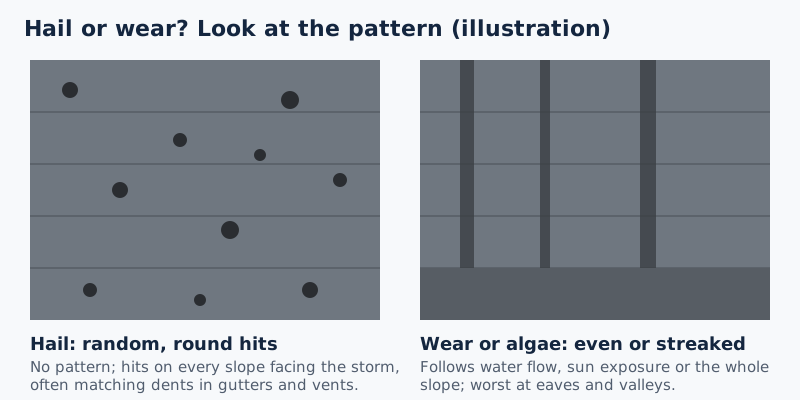
Short answer: by the pattern. Hail is random and recent; wear is uniform, follows water or foot traffic, or matches the roof's age.
| What you see | Likely hail | Likely something else |
|---|---|---|
| Dark spots on shingles | Randomly spaced, round, similar size, on storm-facing slopes | Blisters from heat and age spread evenly; scuffs along a path someone walked |
| Cracks | Short cracks centered on an impact | Long cracks along the shingle or at nail lines from age and thermal movement |
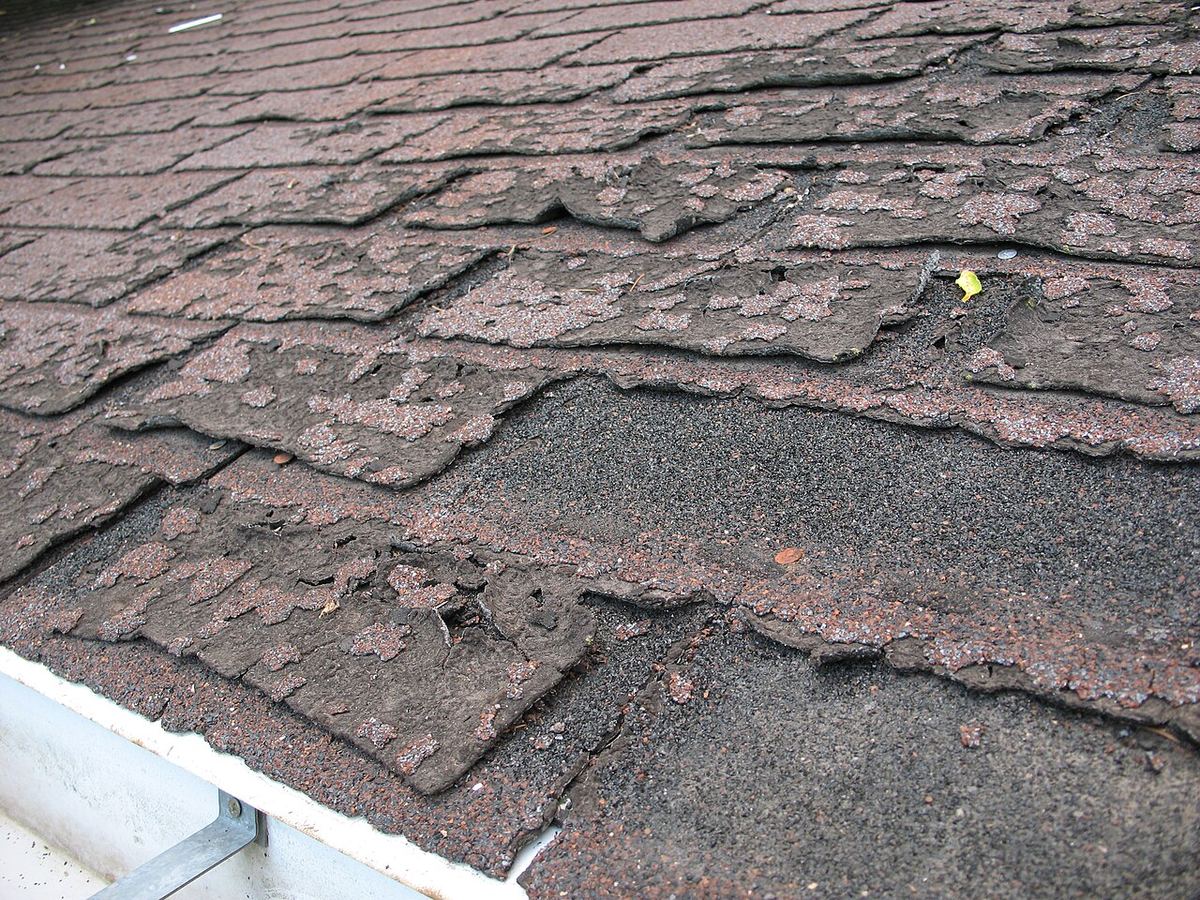
| Bare granule patches | New, with fresh granules in the gutter | Old, gray and weathered; worn where downspouts or upper roofs drain |
| Slate | Fresh breaks with clean, light-colored edges | Weathered breaks, slipped slates and rusted nails |
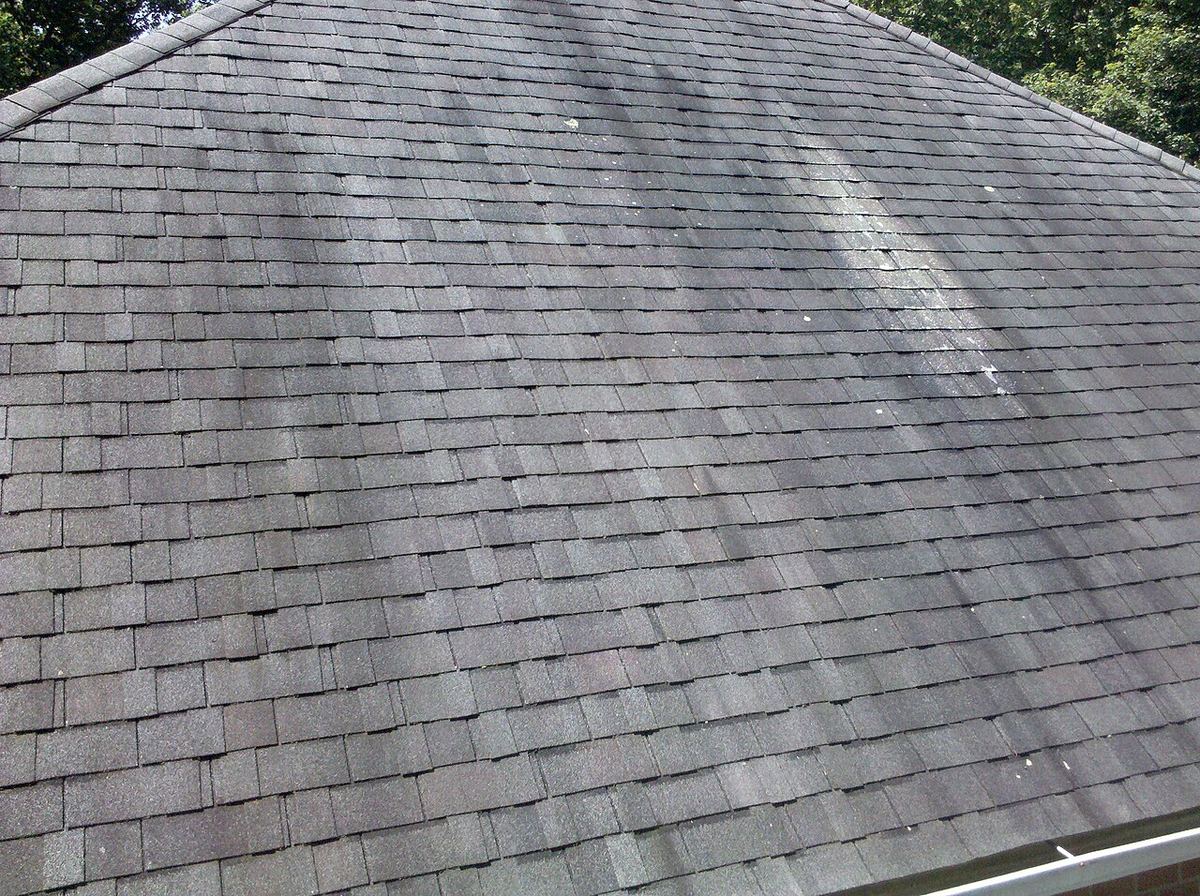
| Black streaks | Not hail | Algae, common on north-facing Triad slopes under trees |
Photos of the roof taken before storm season are the best way to answer "that was already there." A few clear pictures of each slope every spring are enough.
Where does hail show up first around the house?
Short answer: on thin metal. Gutters, downspouts, roof vents, flashing, heat pump fins and the rain cap on a chimney dent at sizes too small to crack a shingle, which makes them good evidence that hail hit and which way it came from.
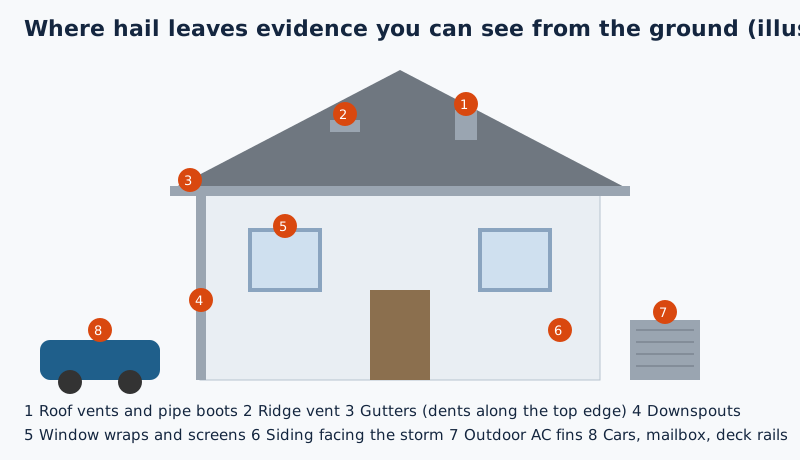
- Gutters and downspouts: look along the front edge for a line of dents.
- Box vents and turbine vents: metal dents; plastic cracks.
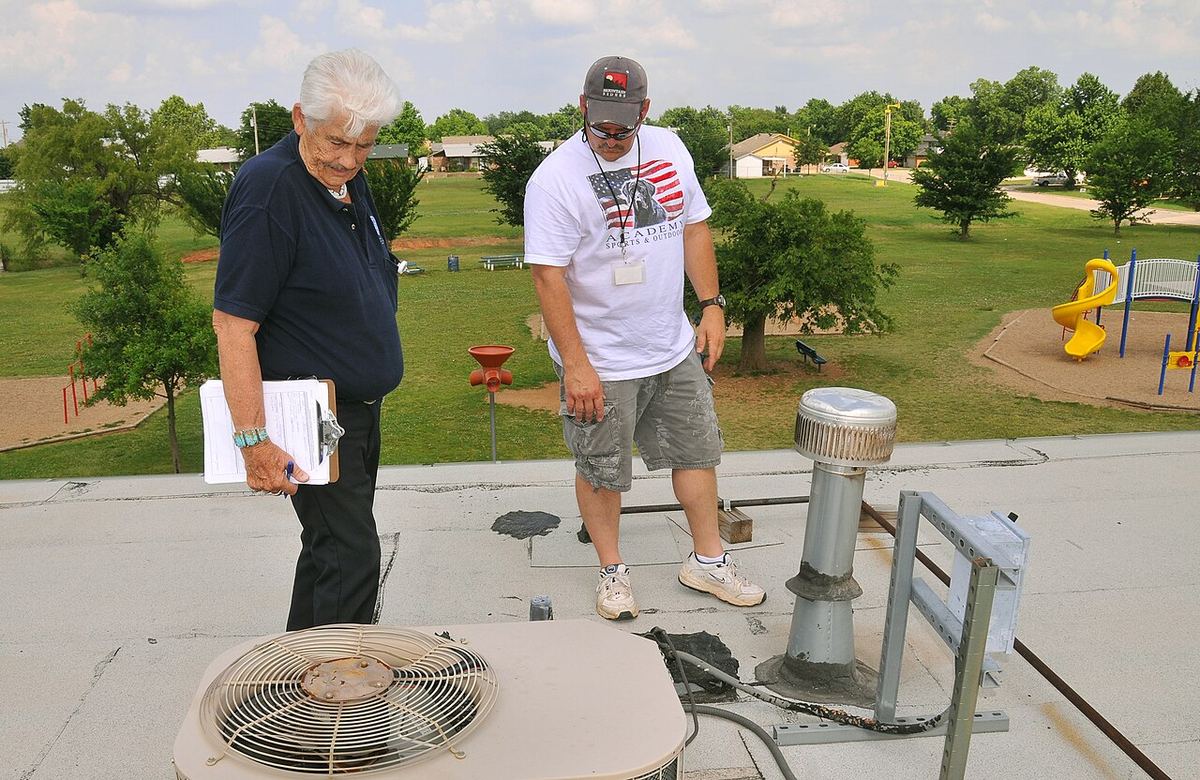
- Heat pumps: fins flatten on the side the storm hit. Note the damage for the claim even if the unit still runs.
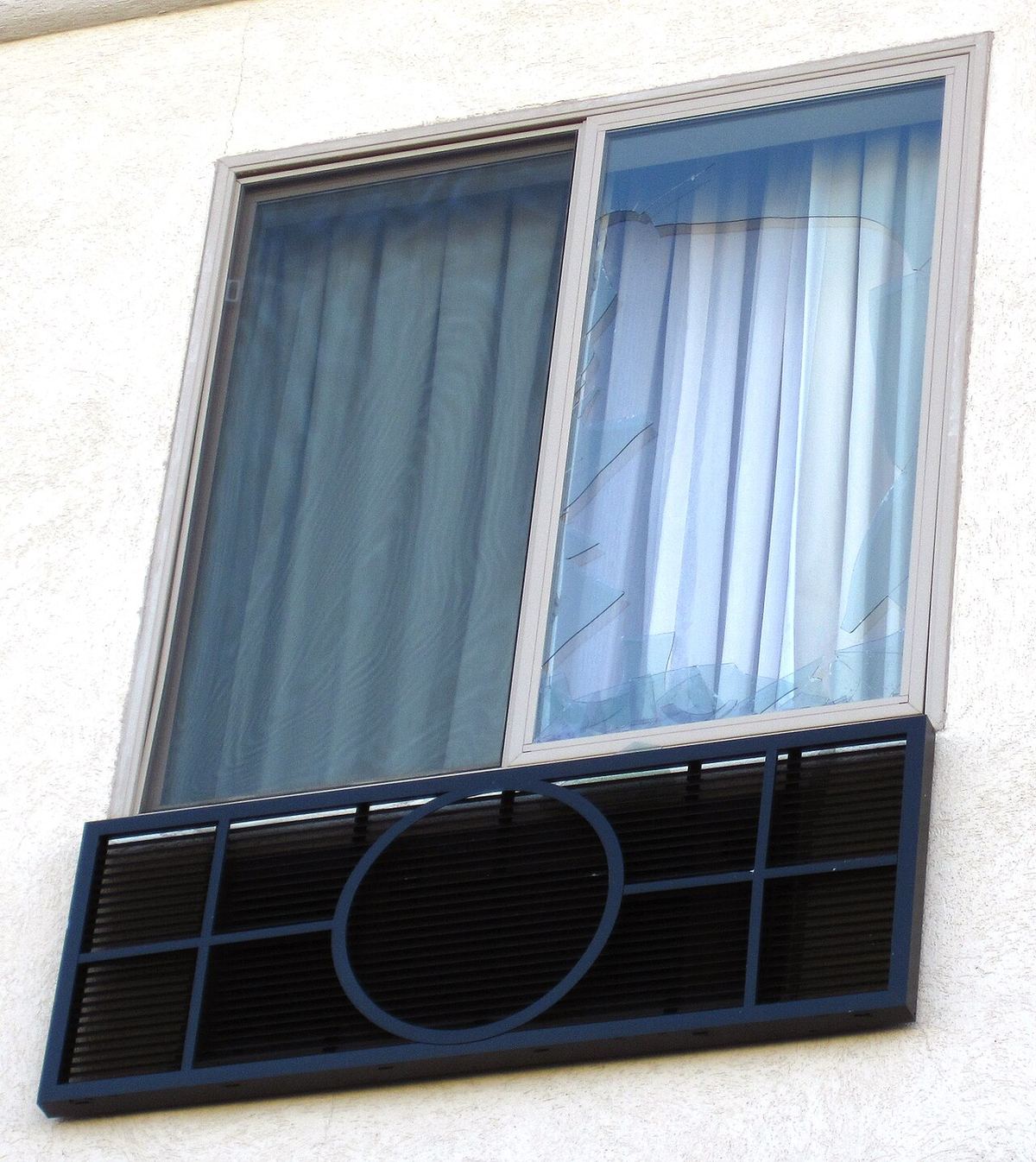
- Screens, shutters and trim: tears and chips line up with the storm direction.
- Decks, fences and sheds: spatter marks on stained wood and dents in metal sheds.
- Cars: dents on the hood and roof help show how big the stones were.
Soft-metal dents alone do not prove the roof failed, but they are a solid reason to get the shingles checked by a roofer or the adjuster.
How big does hail need to be?
Short answer: roughly 1 inch, quarter size, is where shingle damage usually starts, and it is the size the National Weather Service uses for severe hail. Older roofs and wind-driven hail can be damaged by smaller stones.
The Triad gets real hail. The five counties had six reports of 2-inch hail from 2006 through 2025, according to NOAA. What changes the result on a given roof:
- Roof age: a 20-year-old three-tab roof is far more brittle than a five-year-old architectural one.
- Wind: strong downbursts push hail sideways into one face of the house.
- Stone density: clear, hard stones hit harder than soft, white ones.
- Impact rating: UL 2218 Class 4 shingles passed a lab test with 2-inch steel balls; some insurers offer a discount for them.
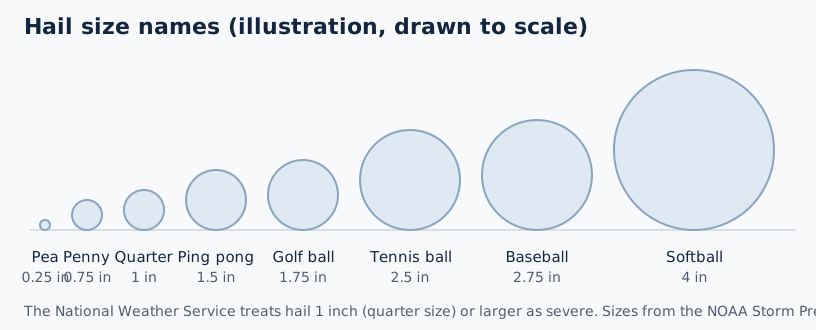
Use the hail size chart to describe what fell, and see the Triad hail history for how often each size has been reported here.
Slate, metal and low-slope roofs
Slate
Slate is still found on older homes in Fisher Park, Irving Park and Westerwood in Greensboro and in Winston-Salem's West End and Buena Vista. Hail cracks and breaks slate, but so do people walking on it. Ask for an inspector who knows slate, and ask how they will avoid breaking more.
Metal
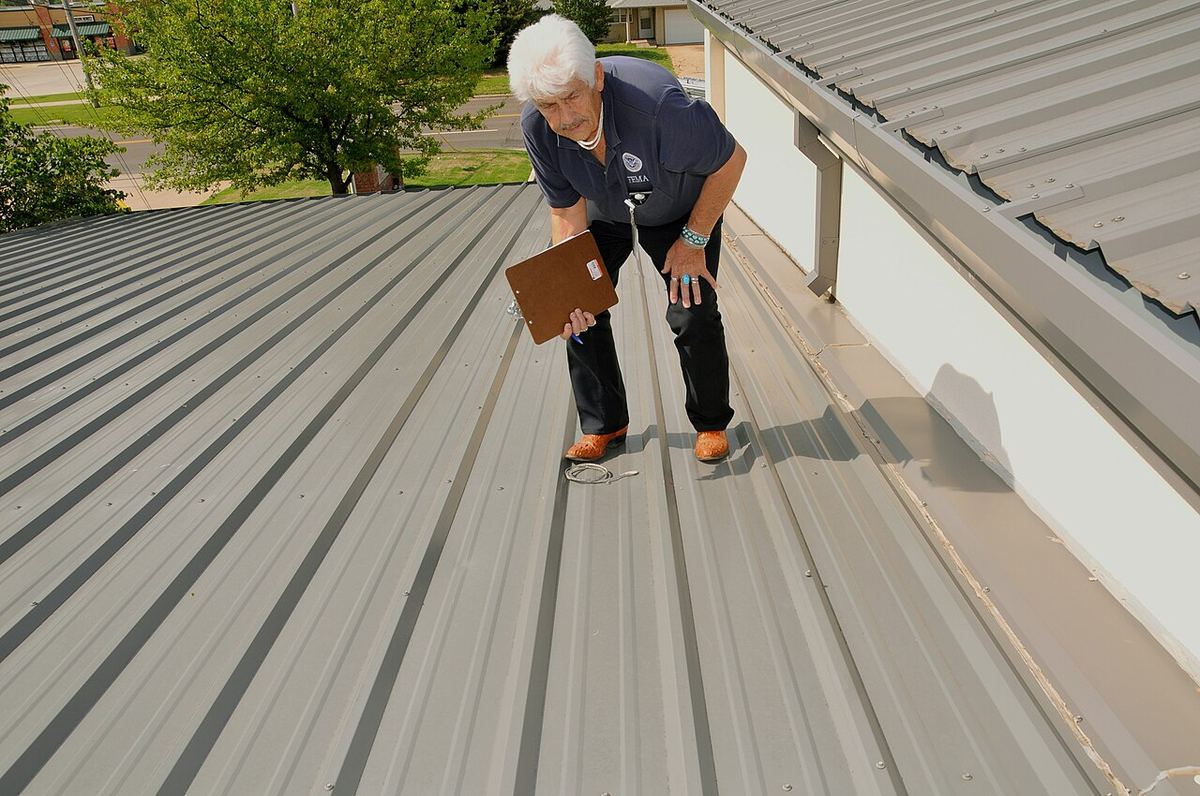
Standing-seam metal is common on farmhouses and outbuildings in Rockingham and Randolph counties and on some newer homes. Hail dents metal without always opening it. Check your policy for a cosmetic damage exclusion; if you have one, dents that do not let water in may not be covered.
Wood shakes
New splits are bright and sharp; old splits are gray and rounded.
Flat and low-slope roofs
Porches, additions and many downtown buildings in Greensboro, High Point and Winston-Salem have low-slope membranes. Hail can puncture an aging membrane or crush the insulation beneath it with little sign on top.
Is the damage functional or only cosmetic?
Short answer: functional damage affects how well the roof keeps water out or how long it lasts. Cosmetic damage changes only its appearance. Most policies pay for functional damage; some exclude cosmetic damage.
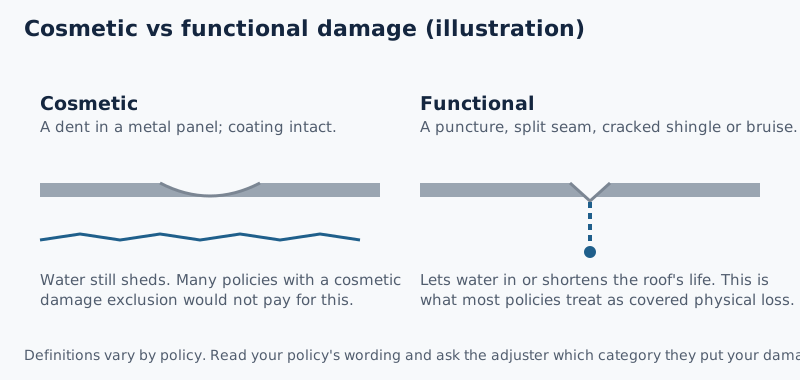
If the adjuster calls dents or marks cosmetic, ask which policy language they are using and ask for it in writing. See reading your policy.
Can hail damage cause a leak months later?
Short answer: yes. A bruise can hold for a while, then let water in once the granules wash away, or after ice and snow sit on the roof in winter.
In the Triad, a May hailstorm can show up as a ceiling stain after a January ice storm. Write down hail dates even if nothing leaks right away, and report damage promptly; your policy sets notice requirements.
What is different about Triad roofs?
Greensboro's Fisher Park, Irving Park and Sunset Hills, Winston-Salem's West End and Buena Vista, and the older mill villages in Alamance County have older homes, some with slate or layered roofs. Slate breaks under hail and under foot, so inspections there should be done by someone experienced with slate. Many newer subdivisions in Summerfield, Oak Ridge and Mebane have architectural shingles that hide bruises well; a close inspection matters.
Should you go up on the roof?
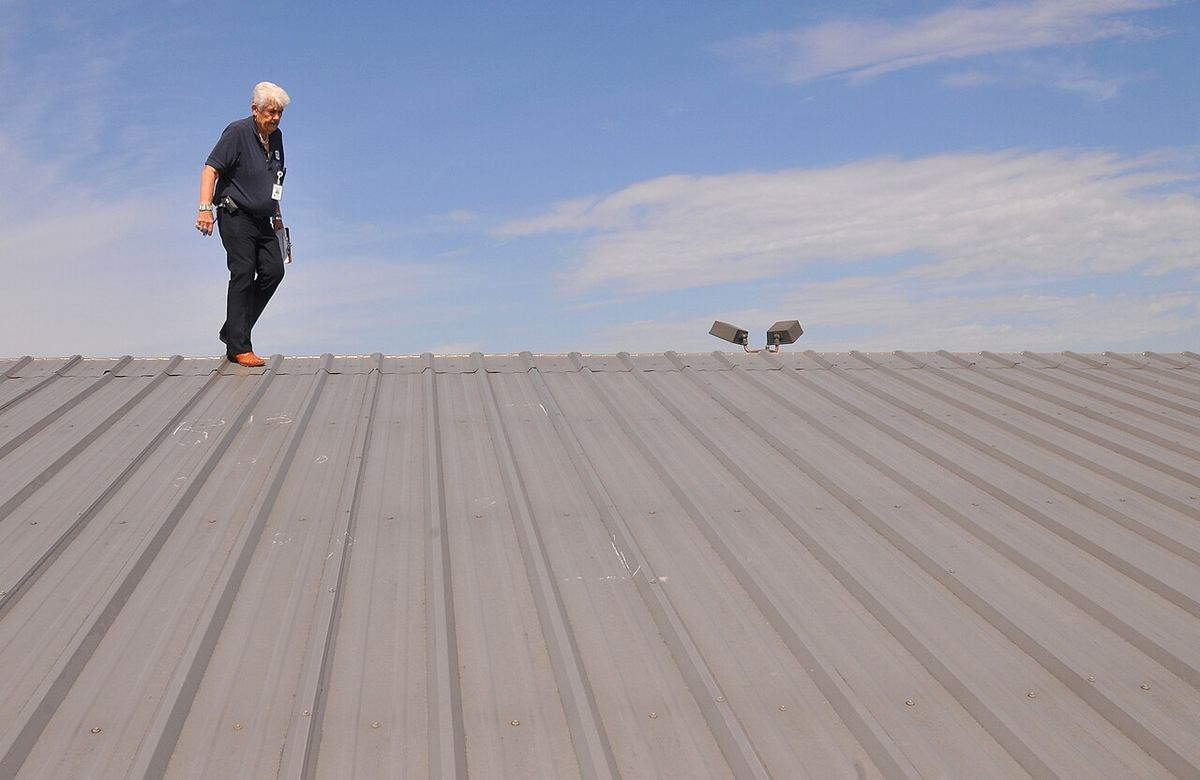
No. Use binoculars or a phone camera from the ground, and leave climbing to a licensed roofer or the adjuster. Two-story homes and steep slopes are common in the Triad, and wet or frosty shingles are slick.
Next steps
Triad hail by the numbers
NOAA's Storm Events Database lists 413 hail reports in Guilford, Forsyth, Alamance, Rockingham and Randolph counties from 2006 through 2025, with May the busiest month. Guilford County reported the most, 131. The single biggest day was May 14, 2006, with 21 reports, and on March 16, 2025, 2-inch hail was reported at three Guilford County locations. See the full Triad hail history.
Impact-resistant shingles
Shingles rated Class 4 under the UL 2218 impact test withstood a 2-inch steel ball in testing without cracking. They resist damage better, though they can still be damaged by very large hail. If you are replacing a roof in the Triad, ask your insurer whether it offers a discount for Class 4 shingles, and keep the product paperwork.
Shingle warranties and hail
Manufacturer warranties generally cover defects, not storm damage. Hail damage is an insurance matter, so don't wait on a warranty claim for a hail-damaged roof.
Hail damage you can't see from the ground
Small hail around an inch can bruise shingles without obvious marks from below. The signs from the ground are usually dents in gutters, downspouts, vents and mailboxes, and spatter marks where hail knocked grime off surfaces. If those are there, have a roofer check the slopes facing the storm.
How big has hail been in each Greensboro and the Piedmont Triad county?
Short answer: since 2006, every county this site covers has had hail of at least 1.75 inches, large enough to damage many roofs. The table shows the largest hail on record in each county (the most recent date if tied) and how many reports were 1 inch or larger.
| County | Largest hail | Where and when | Reports 1 inch or larger |
|---|---|---|---|
| Guilford County | 2.00 in (hen egg) | Broadview, March 16, 2025 | 76 |
| Rockingham County | 2.00 in (hen egg) | Ruffin, May 6, 2022 | 51 |
| Alamance County | 2.00 in (hen egg) | Alamance, April 28, 2016 | 39 |
| Randolph County | 2.00 in (hen egg) | Pisgah, June 26, 2015 | 36 |
| Forsyth County | 1.75 in (golf ball) | Cityview, May 12, 2016 | 36 |
Source: NOAA Storm Events Database, 2006–2025. See the full local hail history.
Triad hail damage check (printable)
- Storm date, time and the largest hail you saw, with a photo of stones beside a coin or ruler.
- Which direction did the storm come from? (Many Triad storms move in from the west.)
- Gutters and downspouts on that side: new dents along the front lip?
- Heat pump or AC: flattened fins on the side facing the storm?
- Box vents, ridge vent, skylight frames and chimney cap: dents or cracks?
- Window screens, painted trim, vinyl siding and the mailbox: tears, chips or holes?
- Fresh granule piles at downspout outlets or in gutters?
- Roof slopes seen from the ground with binoculars or a phone zoom: dark spots, cracked tabs, broken slate?
- Cars, the deck rail, the grill and patio furniture: matching dents?
- Attic and top-floor ceilings checked after the next two rains.
- All photos and notes dated and saved together.
Recent hail reports in the area
| When | Type | Where | Report notes |
|---|---|---|---|
| Hail 1.25" hail | 3 SW Mebane Alamance County | Picture passed along via social media shows a hail stone ranging from 1 to 1.5 inches. Time and approximate location estimated from radar. |
Frequently asked questions
What size hail damages a roof?
Usually about 1 inch (quarter size) or larger, though old or brittle shingles can be hurt by smaller hail.
Why are my gutters dented but my roof looks fine?
Soft metal dents at smaller hail sizes than shingles. Have the roof inspected anyway; bruises are hard to see from the ground.
Can slate be repaired after hail?
Often, by replacing broken slates, if an experienced slate roofer does it. Ask about matching the old slate.
Does insurance cover dents in a metal roof?
It depends on your policy. A cosmetic damage exclusion may exclude dents that do not affect function.
Policies vary. Check your own policy and ask your insurer or agent about anything that affects your claim. Laws and rules can change; this page reflects official sources as of October 29, 2026. RoofingGreensboro.com is not a contractor, insurer, adjuster or law firm.
Find local help
Roofing contractors serving Greensboro and the Piedmont Triad · Ask for storm help · Counties and towns
Sources
- NOAA Storm Prediction Center: Hail size as related to objects
- National Weather Service: Hail
- IBHS: Hail
- NOAA NCEI: Storm Events Database
- NAIC: A Consumer's Guide to Home Insurance
- NC Department of Insurance: FAQs about homeowners insurance
- UL Standards & Engagement: UL 2218, Impact Resistance of Prepared Roof Covering Materials